
Delaware County Arrest Log Sources
Start with the Sheriff. The department posts no official 72-hour, weekly, or historical arrest blotter. Nobody can pull a multi-day booking list straight from one page. The county-linked Inmate Lookup is the closest tool. It is a current-custody table rather than an archive. Its booking-date column helps place a person in time. But once someone leaves custody, the interface offers no documented date-range search or way back. Calling the roster an arrest log would overstate what it keeps.
A sound multi-day trail needs more than one stop. Check the roster for present jail custody first. Then search Indiana MyCase for a public case. Ask the Sheriff or the arresting police department for an older booking or incident record. Prosecutor and Sheriff releases sometimes add event detail when they are published. Local news can point to an incident, yet it stays selective and never amounts to a full county ledger.
Trace Delaware County Arrests
Begin with the sharpest identifier you have. A bare full name invites false matches. An inmate number, booking date, case number, arresting agency, or a tight date range gives each office a far better shot at finding the right arrest file.
- Search the official inmate lookup for current custody and preserve the inmate number and booking timestamp.
- Open the detail row and record the charge case number, statute label, description, and status exactly as displayed.
- Search Indiana MyCase by case number or party name for the public court timeline.
- Check the responsible agency's official releases for a selected incident report or prosecutor announcement.
- For a missing past booking, submit a written APRA request to the Sheriff or the arresting city police department.
- Use local reporting only for context, then verify its claims with the agency, clerk, or court.
The 24 Hour Arrests route is a quick custody check. This page works differently. It follows Delaware County arrest records after the short live view has changed, keeping the jail event separate from the later case result.
Delaware Arrest Record Fields
With no consolidated blotter, fields differ by source. The current roster holds custody and booking details. MyCase holds public court activity. Police reports describe the incident itself, and a prosecutor release may summarize what was filed, so never swap one for another without noticing the difference.
| Field or source | Meaning and limit |
|---|---|
| Name and inmate number | Identity text and a county jail identifier from the live lookup. |
| Booking date/time | The jail's labeled intake timestamp, not a promised publication or arrest time. |
| Scheduled release date | A planning value that can change and does not prove release. |
| Total bond | The roster total, not proof of payment, guilt, or sentence. |
| Statute, description, case number, status | Charge-level booking data that can be amended or dismissed. |
| MyCase events | Public case activity; the clerk holds the official court record. |
| Arresting agency and incident detail | Not displayed by the roster; request these from the responsible police agency. |
| Booking photo | No photo appears in the county roster; availability requires a record-specific agency decision. |
Keep labels and dates exactly as shown. A booking charge should never become anything more. A bond figure is not the final outcome either. The disposition, which is the court's resolution of a charge, belongs to the court record.
Delaware Weekend Arrest Gaps
Delaware County publishes no weekend or holiday update policy. There is no promised morning batch. There is no nightly upload or fixed lag for new entries. So Monday's visible rows cannot show every weekend arrest. Someone may have been booked and released before a later search. The record may sit with a city agency instead of a live county list.
For a weekend event, note the likely arresting agency and the narrowest date range. Check current custody first. Then use MyCase once a case is filed. Contact the jail or the police records custodian. A missing name on the roster never proves no arrest occurred. The county-wide recent-arrests hub explains the broader booking-record and photo-request paths.
Delaware Arrest Archives and Retention
A roster vanishing from a county site does not mean the record was destroyed. Indiana keeps public safety records on fixed timetables. The state's Public Safety Agencies Retention Schedule sorts each series by how long it must last. Daily bulletins face destruction after one year. Adult inmate custody files survive for ten years past the end of incarceration. Arrestee fingerprints are permanent. Police case files vary with the type and outcome of the matter. No booking-photo series is named on its own line, so the custodian decides how each image is classified.
A narrow written request works best while the event is still easy to identify. Name the person, the approximate booking date, the agency, and any case or inmate number. Say exactly which item you want. Ask whether the record stayed with Delaware County, moved elsewhere, was destroyed under an approved schedule, or is restricted. The office only has to produce existing records, not build a new multi-day report from scratch.
Note: MyCase is a court-case resource, not a substitute for a historical jail log or police incident file.
Delaware Arrest News Is Selective
Local coverage runs on events, not on a daily blotter. Indiana Public Radio, WMUN/Woof Boom, The Star Press, WRTV, WISH-TV, and WBIW all may report notable Delaware County arrests or agency releases. Their archives can add context. They can also help identify an agency. But silence from an outlet proves nothing about whether an arrest happened. Publication choices, corrections, and later court events matter. Together they make news a shaky stand-in for an official record. The Indiana Public Radio report is one such event-specific story, with audio and a transcript.
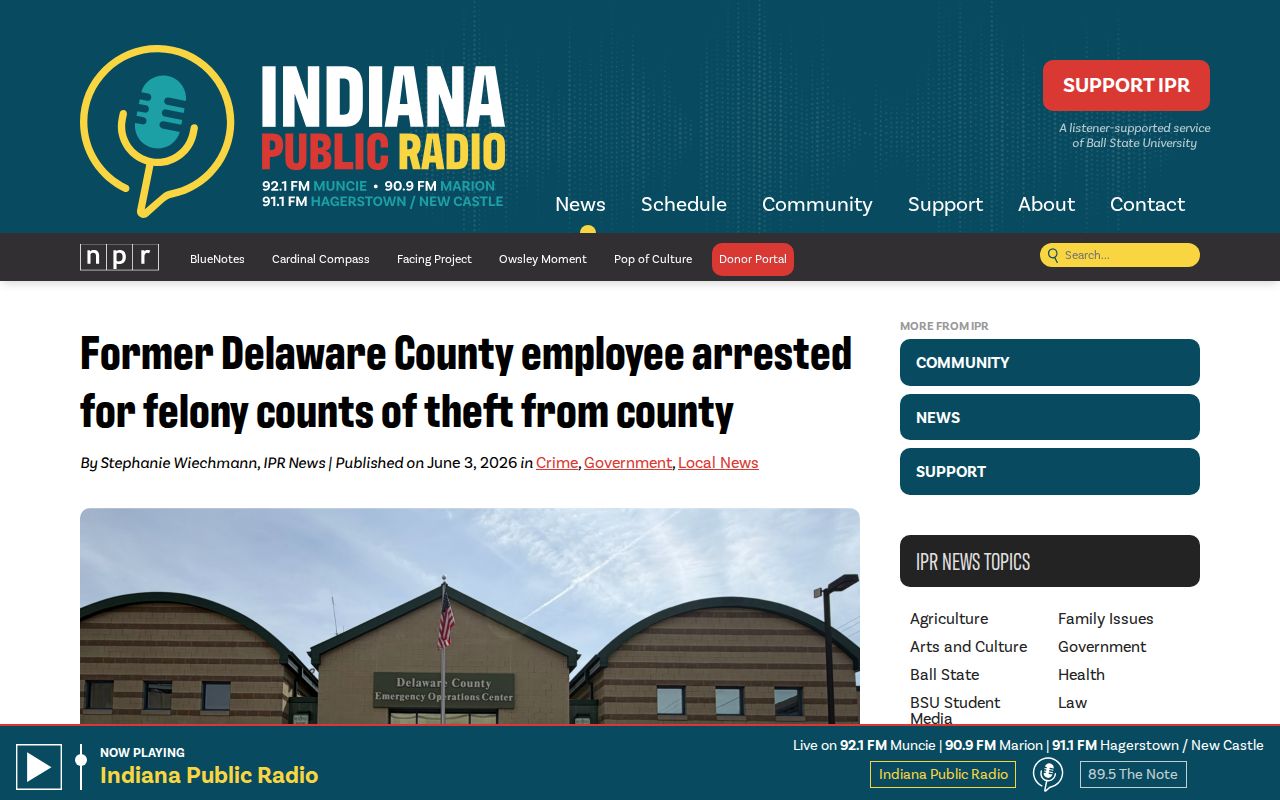
One story is just one story. It is not a county booking list. A WMUN local news summary works the same way, a radio digest that can mention arrests without showing a full jail window.
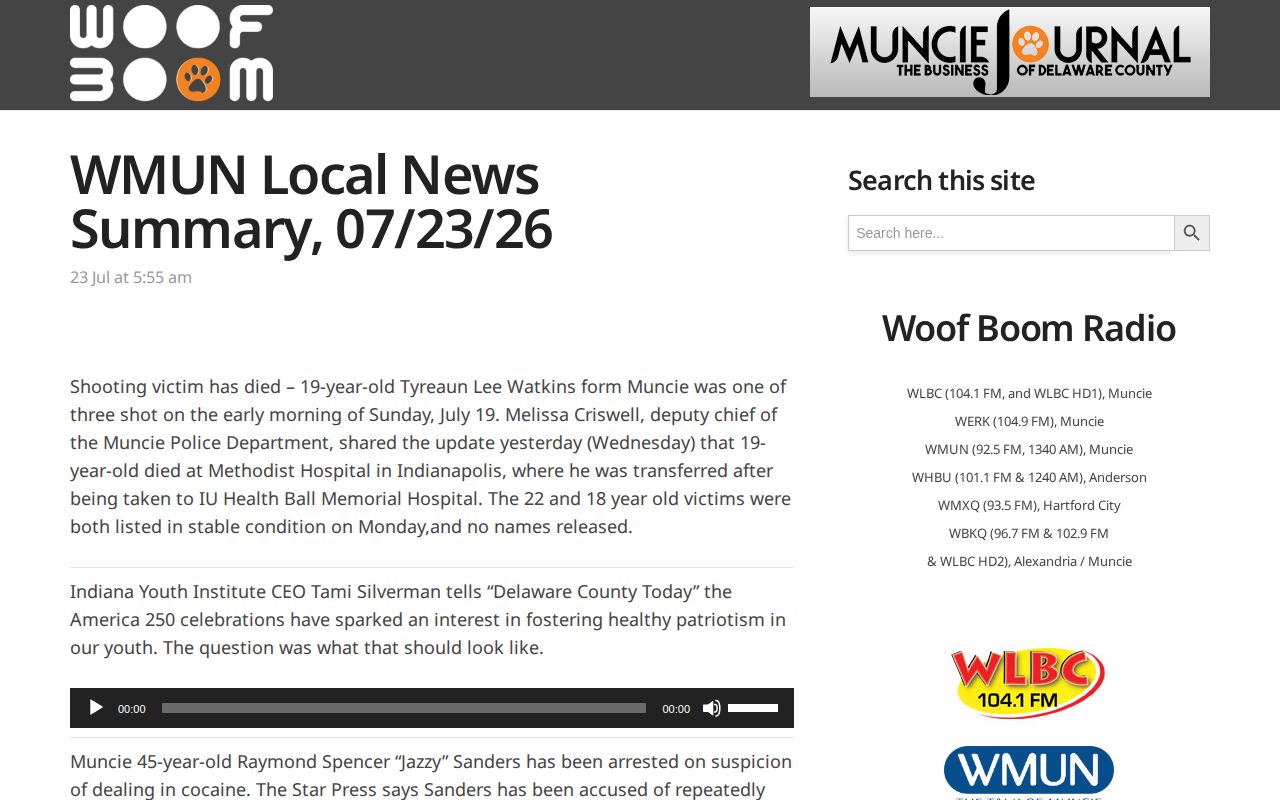
Useful for dated context. Not for custody status. The Sheriff, the arresting agency, and the court remain authoritative. The WBIW pursuit report shows why county boundaries deserve a check in any regional arrest story.
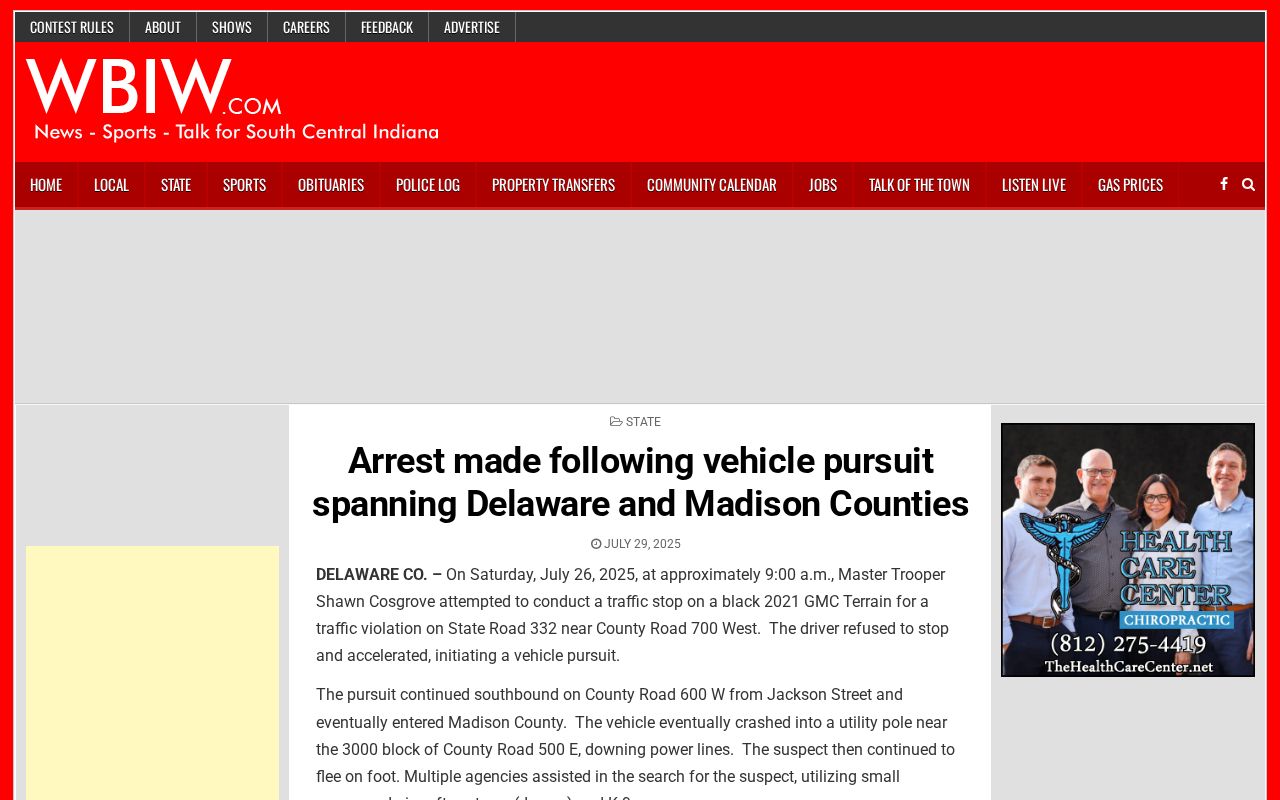
Good for event and agency context, but never a Delaware County archive or custody feed.
Delaware Arrest Allegations Can Change
An arrest report, a roster row, a prosecutor release, and a news story can each sit at a different stage of the same event. Booking is intake at the jail. Arraignment is the early court hearing where charges and rights are addressed. Bond deals with release conditions while a case is pending. Disposition is the court's eventual resolution. Blend those stages together and an old arrest can look final when the filed charge changed or ended.
Charges can be reduced, dismissed, merged, or resolved differently from the wording first shown at the jail. So verify before relying on any one snapshot. Check current custody with the jail. Check the incident record with the arresting agency. Check the legal result with the clerk or the court.